Hire C Developers
Build Software That Runs Close to the Metal.
Architect high-performance protocol stacks, embedded software, and real-time telecom engines.
Hire The BestTrusted by 750+
 G2
G2 Gartner
 Trustpilot
High-Level Coding vs. Close-to-Metal Engineering
Faster servers aren’t the only solution. You need engineers who know how to manage memory.
- Logic that ignores underlying hardware constraints.
- Unoptimized memory allocation causing eventual leaks.
- Basic socket programming that bottlenecks under network load.
- Generic software builds struggling with real-time demands.



Writing an OS-level component or a massive VoIP media engine?





What Our C Developers Build for You
Unrivaled speed and total hardware control for your most critical infrastructure.
High-Performance VoIP Protocol Stacks (SIP & RTP)
Real-Time Telecom Switching Systems
Deep Operating System Components & Drivers
Advanced Embedded Systems & IoT Devices
High-Speed Network Applications & Packet Processing
Low-Level Telecommunication Infrastructure Software

The Engineering Expertise of Our C Developers
Flawless memory management and concurrency: the exact skills that prevent system failures.
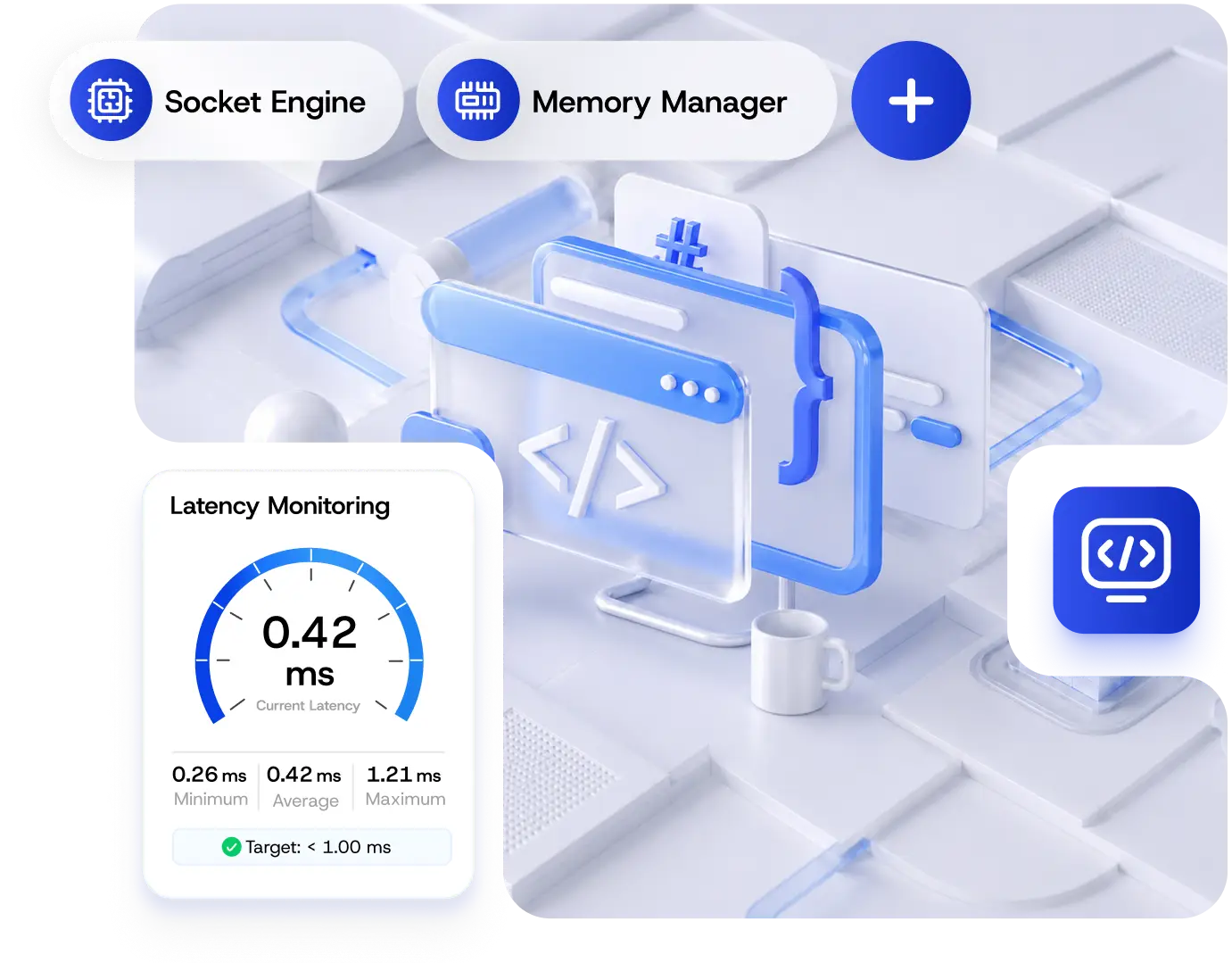
Core System Programming
- Optimize Extreme Memory Management & Allocation
- Implement Advanced Multithreading & Concurrency Logic
- Execute Highly Complex Socket Programming
- Tune Performance For Absolute Minimum Latency
- Develop Close-To-Metal Embedded Systems Architecture
- Design & Interface Operating System Level Drivers
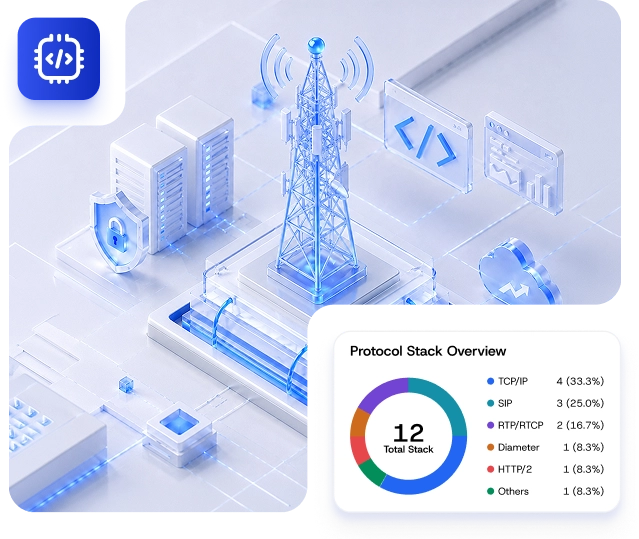
Protocol & Telecom Development
- Develop Custom TCP/IP & SIP Protocol Stacks
- Engineer High-Performance VoIP Media Engines
- Handle Complex Telecom Protocol Routing
- Process Massive Network Packets In Real-Time
- Execute Deep Linux System-Level Programming
- Audit & Debug Low-Level System Vulnerabilities


The Advantage of C Expertise
Absolute control over your memory allocation, down to the exact byte.
Deep Hardware & System-Level Mastery
Extreme Performance And Latency Optimization
Advanced Telecom Protocol And VoIP Expertise
Complex Embedded Systems Architecture Design
Flawless Concurrency And Multithreading Logic
Rapid Deployment Of Elite Low-Level Engineers


The Roles We Fill
Connect with engineers who treat a single millisecond of latency as a total failure.
System-Level C Programmers
Build system-level software for high-performance and resource-constrained environments.
Telecom Protocol Engineers
Develop highly customized SIP and RTP stacks for massive real-time communication networks.
Embedded Systems Developers
Architect low-latency software for custom IoT devices and proprietary hardware.
Performance Optimization Specialists
Audit low-level codebases to optimize code for memory efficiency, concurrency, & low latency.
Frequently Asked Questions
Companies hire C developers when they need absolute control over system resources. Unlike higher-level languages, C provides direct memory access and minimal runtime overhead, making it mandatory for building high-performance systems, operating system components, embedded devices, and real-time telecom engines.
When building for telecom, C developers focus on absolute minimal latency. They engineer highly customized VoIP media engines, SIP protocol handlers, and telecom switching systems that use advanced multithreading and socket programming to process massive network packets without dropping streams.
C is the industry standard for embedded systems because of its close-to-metal capabilities. An expert C developer writes firmware and software that runs directly on microcontrollers, allowing IoT devices to execute complex tasks with highly restricted memory and power constraints.
To handle high-performance concurrency, C developers utilize advanced multithreading techniques and strict memory management. This ensures that multiple processes (such as concurrent SIP sessions or real-time data packets) are executed in parallel without causing system crashes or memory leaks.
A top-tier C programmer possesses deep expertise in memory management optimization, pointer manipulation, and multithreading. They must have extensive experience in deep Linux system programming, socket networking, and protocol development (like TCP/IP and SIP) for real-world production environments.