Hire Node.js Developers
Event-Driven Execution for Massive Throughput.
Build backends that process telecom streams and heavy AI engines without dropping a packet.
Hire The BestTrusted by 750+
 G2
G2 Gartner
 Trustpilot
Basic Express Routing vs. Asynchronous Architecture
Move from standard routing to an architecture hardened for real-time WebRTC & AI pipelines.
- Single-threaded event loops that block under heavy load.
- Monolithic backend structures that fail during traffic spikes.
- High-latency data transfers causing dropped connections.
- Generic REST APIs that choke on heavy payloads.



Jammed concurrent connections? Get experts who can unblock the queue!





What Our Node.js Developers for You
Asynchronous environments with thousands of active WebSockets running without stalling the server.
Real-Time Telecom & VoIP Application Backends
AI-Powered Call Analytics Platforms
High-Throughput SIP Servers & WebRTC Engines
Conversational AI & Voice Bot Architectures
Distributed Microservices For Enterprise Scaling
Predictive Call Routing & Fraud Detection Systems

The Engineering Expertise of Our Node.js Developers
We specialize in the extreme where high-traffic microsecond routing and predictive AI intersect.
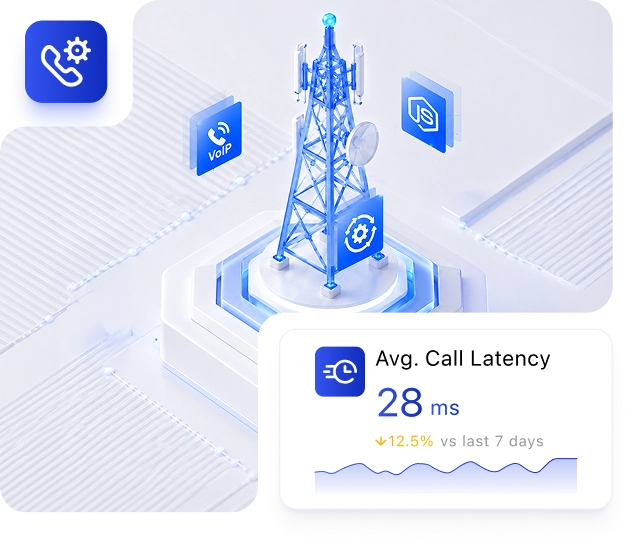
Node.js for Telecom & VoIP Solutions
- Process Real-Time Communications Via WebRTC & SIP
- Engineer High Concurrency Handling For Massive Call Volumes
- Architect Low-Latency Media Routing Systems
- Deploy Scalable Microservices for Telecom Infrastructure
- Build Custom PBX & Call Center Backend Solutions
- Integrate Telephony APIs with Zero Performance Degradation
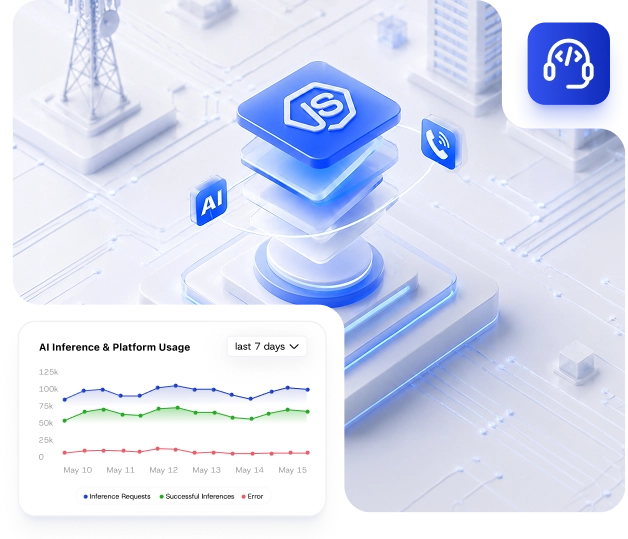
Node.js + AI Use Cases
- Develop AI-Powered Call Analytics Platforms
- Engineer Low-Latency Voice Bots & Conversational AI
- Implement Machine Learning for Telecom Fraud Detection
- Architect Predictive Call Routing Algorithms
- Build Asynchronous Pipelines for Large Language Models
- Process Massive Datasets for Real-Time AI Inference


The Advantage of Node.js Expertise
Coders who turn the most chaotic telecom workloads into predictable background processes.
Unmatched Asynchronous Event-Driven Execution
Native JSON Handling for Lightning-Fast API Responses
Deep Expertise in V8 Engine Optimization
Flawless Execution of Real-Time Communication Protocols
Rapid Integration of Complex AI & Machine Learning Models
Immediate Deployment of Vetted Backend Specialists


The Roles We Fill
Equip your team with the backend talent needed to fuse real-time WebRTC with complex LLMs.
Node.js Telecom Architects
Design the asynchronous infrastructure needed for multi-party SIP & WebRTC environments.
Backend Microservices Engineers
Break down heavy legacy applications into agile, independent services that scale autonomously.
AI Integration Specialists
Integrate complex conversational AI & ML engines directly into your real-time data streams.
Performance Tuning Experts
Audit your existing event loops to eliminate blocking operations & optimize memory allocation.
Frequently Asked Questions
Node.js is built on an asynchronous, event-driven architecture that excels at handling high-concurrency tasks. When you hire Node.js developers for VoIP software development, you get a backend capable of processing thousands of simultaneous SIP and WebRTC connections with incredibly low latency.
Node.js telecom development focuses on non-blocking I/O operations. This means the server can handle massive volumes of real-time call processing, predictive routing, and media streams without waiting for previous tasks to finish, ensuring crystal-clear audio and zero dropped connections.
Yes. A skilled Node.js AI development team can seamlessly integrate machine learning models, natural language processing (NLP), and conversational AI directly into your telecom infrastructure, enabling intelligent voice bots and automated customer service routing.
For an AI call analytics platform, the backend must process massive amounts of audio data and metadata in real-time. Node.js experts utilize its fast execution speed and native JSON support to rapidly parse data, enabling features like live sentiment analysis and telecom fraud detection on the fly.
When you hire Node.js programmers, they break down monolithic architectures into independent microservices. This allows your VoIP engines, API gateways, and AI modules to scale independently, significantly improving uptime and fault tolerance across your entire enterprise system.